
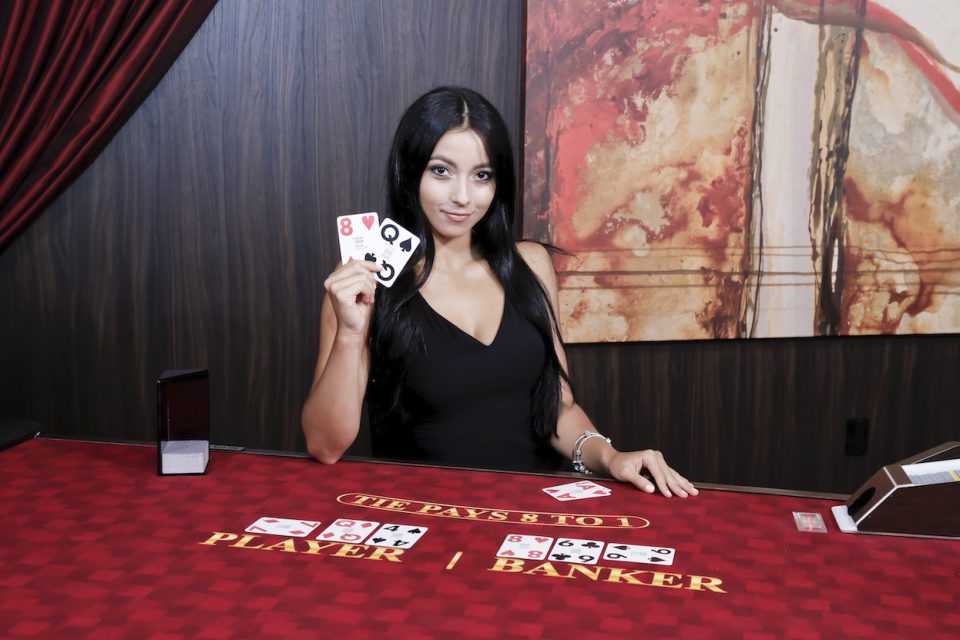
Baccarat has long held an aura of sophistication on the casino floor. Conjuring images of high-stakes gamblers in tailored tuxedos, hushed private salons, and sweeping card reveals, the game is uniquely celebrated for its elegant simplicity. Unlike blackjack or poker, which demand complex mathematical strategies and intense memorization, baccarat requires zero decision-making from the player once the initial wagers are locked in. You simply choose whether to back the Player hand, the Banker hand, or a tie, and the dealer handles the rest according to a rigid, unyielding set of drawing rules.
Yet this deceptive simplicity masks a stark mathematical reality. While baccarat offers some of the best baseline odds in the entire casino, it also harbors one of the most predatory, mathematically destructive wagers available to players. The tie bet stands as a shining example of casino architecture designed to exploit human psychology. It dangles an attractive payout in front of the unwary player while concealing a devastating house edge that dwarfs almost every other standard bet on the table. Understanding why the tie bet is a statistical trap requires looking past the glamour of the felt and examining the unyielding cold math governing the game.
The Anatomy of Baccarat Wagering Options
To appreciate why the tie bet is such an outlier, we must first establish the baseline dynamics of standard baccarat wagering. When you step up to a standard baccarat table, you are presented with three primary betting choices. You can wager on the Player hand winning, the Banker hand winning, or both hands finishing with identical point totals, resulting in a tie.
The fundamental mathematics of these options reveal a massive discrepancy in risk and reward. When you bet on the Player hand, the house edge sits at a very manageable 1.24 percent. If you bet on the Banker hand—which wins slightly more frequently due to the third-card drawing rules governing the shoe—the house edge drops even further to 1.06 percent, even after accounting for the standard five percent commission the casino charges on winning Banker wagers. These figures place baccarat among the fairest games in the casino, rivaling single-zero roulette and basic strategy blackjack.
Then, sitting awkwardly between the two primary wagering areas on the layout, lies the tie bet. Offering a tempting payout that typically ranges from 8 to 1 to 9 to 1, the tie bet immediately captures the attention of players looking for a quick windfall. However, that elevated payout is a carefully constructed smoke screen masking a house advantage that completely shatters the otherwise player-friendly nature of the game.
Deconstructing the Math Behind the Tie
The allure of an 8-to-1 or 9-to-1 payout is undeniable. When a player sees a wager that multiplies their stake nearly tenfold, the human brain instinctively focuses on the potential upside while ignoring the underlying probability. To understand why this payout is a mathematical illusion, we must examine the true combinatorial odds of a tie occurring in a standard six-deck or eight-deck baccarat shoe.
Baccarat is dealt from a shoe containing multiple standard decks of fifty-two cards, shuffled together. The point values of the cards are straightforward: face cards and tens count as zero, aces count as one, and cards two through nine retain their face value. The total score of a hand is determined by summing the card values and dropping the tens digit, meaning the highest possible score is nine and the lowest is zero.
When calculating all possible card combinations that can emerge from a shoe over millions of simulated deals, a tie—where both the Player and Banker finish with the exact same total score—occurs with a frequency of roughly 9.53 percent using an eight-deck shoe.
Because a tie happens roughly once every ten or eleven hands, paying out 8 to 1 on a winning tie bet does not cover the true mathematical odds of the event occurring. In fact, an 8-to-1 payout on an event that happens less than ten percent of the time results in a staggering house edge of 14.36 percent. If the casino offers a slightly enhanced payout of 9 to 1, the house edge drops, but it still hovers around an unacceptable 4.84 percent, which remains significantly worse than standard Player and Banker wagers.
To put a 14.36 percent house edge into perspective, consider what it means for your bankroll. It places the baccarat tie bet in the exact same predatory category as the worst slot machines, keno, and high-margin novelty side bets. For every one hundred dollars you cycle through the tie bet over the long run, you are mathematically expected to lose over fourteen dollars.
The Psychological Trap of the Streak
If the math is so overwhelmingly unfavorable, why do otherwise rational players continue to dump chips onto the tie bet? The answer lies in the psychological mechanisms casinos use to manipulate player behavior.
Baccarat players are notoriously obsessed with patterns. Walk past any live baccarat table in Las Vegas, Macau, or London, and you will see players meticulously tracking previous outcomes on paper scorecards or digital display boards, searching for streaks, chops, and alternating patterns. The tie bet occupies a unique psychological space within this culture of pattern recognition.
Because ties happen relatively infrequently—roughly once every ten hands—they stand out vividly in the memory of the player. When a tie breaks a long sequence of Banker wins, it creates a dramatic moment on the table. Casinos capitalize on this by designing scoreboards that highlight ties explicitly, often using a distinct green slash or symbol.
Players watching the board begin to feel that a tie is overdue simply because twenty hands have passed without one. This is a textbook manifestation of the gambler’s fallacy, the irrational belief that independent random events are influenced by past outcomes. The baccarat shoe has no memory; the probability of a tie occurring on any individual hand remains identical regardless of what happened on the previous fifty deals. Yet, driven by the excitement of a high payout and the illusion of a cyclical pattern, players chase the tie, watching their bankrolls evaporate under the crushing weight of the fourteen percent house edge.
Comparing Baccarat Wagers
To truly grasp how damaging the tie bet is to your long-term session health, it is helpful to look at a direct comparison of the three primary baccarat wagers side by side:
-
Banker Bet: House Edge of 1.06 percent. This is the mathematically optimal play in baccarat, offering the highest long-term return despite the five percent commission on wins.
-
Player Bet: House Edge of 1.24 percent. A clean, commission-free wager that sits just slightly behind the Banker bet in terms of statistical expectation.
-
Tie Bet: House Edge of 14.36 percent (at an 8-to-1 payout). A catastrophic mathematical outlier that drains bankrolls at an accelerated rate.
When viewed in this comparative light, the absurdity of the tie bet becomes glaringly obvious. Choosing to place your money on the tie when the Banker and Player bets are sitting right next to it on the felt is the mathematical equivalent of voluntarily paying a fourteen-percent tax on every single wager you make.
Protecting Your Bankroll at the Table
Navigating baccarat successfully requires disciplined adherence to basic statistical truths. Baccarat is fundamentally a game of low house edges, making it an excellent choice for players who want to stretch their entertainment budget as far as possible while enjoying a classic casino atmosphere. However, that advantage only holds true if you strictly avoid the traps built into the table layout.
Winning baccarat strategy is remarkably simple: ignore the tie bet entirely. Treat the tie wagering area as if it does not exist on the felt. Stick exclusively to the Banker bet, or alternate with the Player bet if you prefer avoiding the commission calculation, though the Banker bet remains the undisputed king of optimal baccarat strategy due to its marginally superior odds.
Resist the temptation to place a casual tie bet just to spice up a quiet shoe or chase an attractive payout. Those casual wagers compound over the course of an evening, quietly and efficiently eating away at your chip stack until your bankroll is gone. By understanding the math, recognizing the psychological triggers of pattern chasing, and maintaining strict betting discipline, you can enjoy the elegance of baccarat without falling victim to its most lucrative illusion.
