
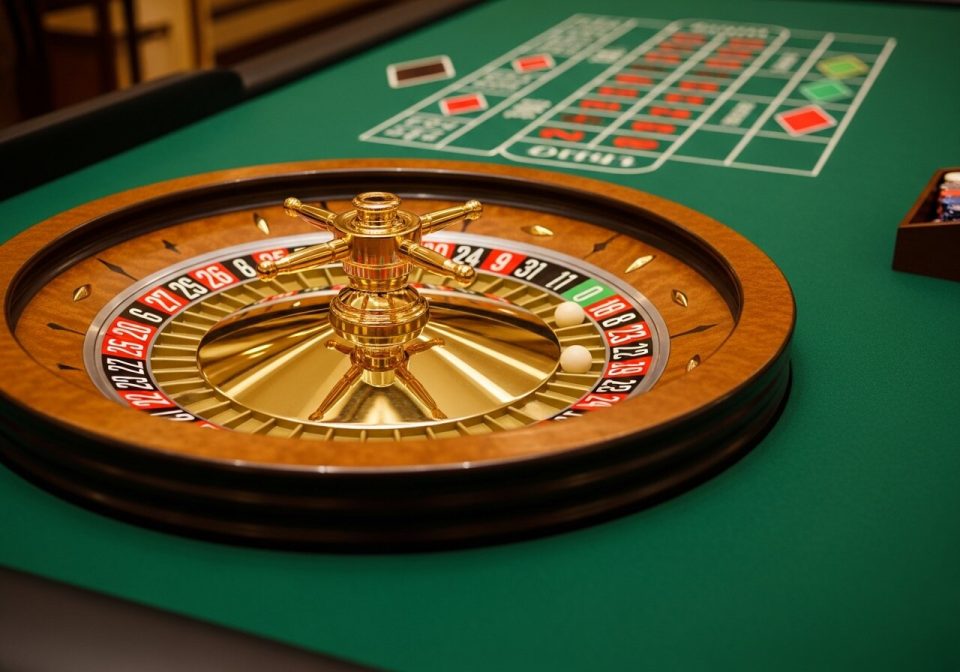
When you walk into a traditional casino or log onto a digital gaming platform, the roulette wheel stands as one of the most iconic symbols of gambling culture. Its hypnotic spin, the gentle clatter of the ivory ball bouncing across numbered pockets, and the vibrant layout of the betting table have captivated players for centuries. To the casual observer, all roulette wheels look virtually identical. They feature a polished wooden bowl, a spinning metal track, and a sequence of alternating red and black numbers that invite players to place their wagers and test their intuition.
Yet this surface-level similarity masks a crucial mathematical distinction that separates winning sessions from guaranteed long-term losses. Across the global gaming industry, roulette exists primarily in two major variations: European roulette and American roulette. While both games share identical rules, payout structures, and betting options, they differ fundamentally in the layout of the wheel itself. That single structural difference—the presence of an extra pocket on the American wheel—creates a massive mathematical divergence known as the single zero advantage. Understanding how this extra green pocket alters the house edge is the single most valuable piece of knowledge any roulette player can acquire.
The Anatomy of the Roulette Wheel
To comprehend why the house edge shifts so dramatically between the two versions, you must first examine the physical construction and numbering system of the wheels. The game of roulette originated in France during the eighteenth century, and the traditional European layout established during that era features thirty-seven total pockets. These pockets consist of the numbers one through thirty-eight distributed alternately in red and black, alongside a single green pocket marked with a zero.
When the game migrated across the Atlantic and gained popularity in American gambling dens, casino operators sought a way to increase their profitability without altering the core rules of play. Their solution was deceptively simple. They introduced a second green pocket to the wheel: a double zero. This addition expanded the total number of pockets on the American wheel from thirty-seven to thirty-eight.
That one extra pocket might seem insignificant to a casual player watching the wheel spin, but in the realm of probability, it represents a monumental shift. Every single wager placed on a roulette table—whether you are betting on a single specific number, a split, a street, or even external propositions like red or black—is mathematically calculated based on the total number of pockets on the wheel. By adding the double zero, American casinos fundamentally tilted the mathematical equilibrium further in their favor on every single spin of the wheel.
Deconstructing the House Edge in European Roulette
To appreciate the fairness of European roulette, we must examine how its probability model operates. A standard European wheel contains thirty-seven compartments, numbered zero through thirty-six. When you place a wager on an even-money proposition such as red or black, odd or even, or high or low, you are betting on eighteen numbers out of the total thirty-seven.
If the game were completely fair with zero house advantage, the true odds of hitting red on a European wheel would be eighteen out of thirty-seven, and the payout would reflect that exact ratio. However, casinos are commercial enterprises, not charities. The European layout manages its house edge entirely through the single zero. When the ivory ball lands on the green zero, all even-money bets lose.
This single green pocket gives the European game a house edge of 2.70 percent. To calculate this mathematically, you divide the single zero by the total number of pockets: one divided by thirty-seven equals approximately 2.70 percent. This means that for every one hundred dollars wagered over the long term, the casino expects to retain two dollars and seventy cents. In the broader ecosystem of casino gaming, a 2.70 percent house edge is remarkably player-friendly, making European roulette one of the better table game options for stretching an entertainment budget.
The Mathematical Impact of the Double Zero in American Roulette
When you transition to an American roulette table, the addition of the double zero dramatically alters the underlying mathematics. The American wheel features thirty-eight pockets: numbers one through thirty-six, a single zero, and a double zero.
Consider how this impacts an even-money bet like red or black. There are still eighteen red numbers and eighteen black numbers on the wheel, but now there are two green pockets instead of one. Your probability of winning an even-money bet drops from eighteen out of thirty-seven to eighteen out of thirty-eight.
When you run the mathematical expectation for American roulette, the house edge surges to 5.26 percent. This figure is derived by dividing the two green pockets—the zero and the double zero—by the total thirty-eight pockets on the wheel: two divided by thirty-eight equals 5.26 percent.
Comparing the two house edges side by side reveals the stark financial reality of table selection:
-
European Roulette (Single Zero): House Edge of 2.70 percent
-
American Roulette (Double Zero): House Edge of 5.26 percent
By choosing to play American roulette instead of European roulette, you have nearly doubled the house edge. You are paying a hidden tax of 5.26 cents on every dollar wagered over time. Over the course of a multi-hour gaming session involving dozens of spins and stacked bets, that difference in house advantage drains bankrolls at an accelerated, highly destructive rate.
The Basket Bet: The Worst Wager on the American Layout
The introduction of the double zero on the American wheel does more than just elevate the general house edge across all standard bets. It also gives birth to one of the single worst specific wagers available on any casino floor: the basket bet, frequently referred to by players as the top line bet.
On an American roulette table layout, players can place a chip on the intersecting line shared by the zero, double zero, one, two, and three. This five-number combination bet is unique to the American layout because a European wheel only contains four of those numbers in sequence.
The payout for hitting the basket bet is 6 to 1. However, because the wheel contains thirty-eight pockets and your bet covers five of them, the true mathematical probability of winning does not justify the payout. The house edge on the American five-number basket bet skyrockets to an astonishing 7.89 percent.
This makes the basket bet one of the most predatory wagers in traditional table gaming, easily rivaling the worst slot machines and side bets. Experienced players know to avoid the basket bet entirely, as it accelerates bankroll depletion faster than almost any other standard option on the felt.
The Psychological Allure of the American Wheel
Given the overwhelming mathematical superiority of European roulette, a logical question arises: why do players continue to sit at American roulette tables?
The persistence of the double-zero wheel is driven primarily by availability and geographical habit. In many brick-and-mortar casinos across the United States, American roulette tables dominate the main gaming floor. They are often set at lower minimum betting limits compared to the pristine, single-zero European tables that are occasionally sequestered away in high-limit salons or specialized pit areas. Casual players searching for a low-stakes table frequently gravitate toward the American layout without realizing that the money saved on lower minimums is rapidly lost to the higher 5.26 percent house edge.
Furthermore, many players treat roulette as an exercise in pure entertainment where statistical calculations take a backseat to the sensory experience of the spin. While enjoying the game casually is entirely valid, ignoring the math means accepting a much higher cost of admission for your entertainment.
Strategic Implications for the Player
Navigating the world of roulette successfully requires a commitment to game selection above all else. No betting system, progression strategy, or lucky charm can overcome the mathematical reality of the house edge. The Martingale system, D’Alembert progression, and Fibonacci sequences cannot alter the fundamental probabilities inscribed into the physical layout of the wheel.
Because strategies cannot beat the math, your single most powerful tactical decision happens before you ever place a chip on the table. You must hunt exclusively for single-zero European roulette wheels.
When playing online, this task is straightforward, as digital platforms frequently offer European variants alongside American ones with a simple click. In brick-and-mortar casinos, finding a single zero might require searching the high-limit room or asking pit bosses if single-zero tables are available on the main floor. Additionally, if you find a European casino or digital platform that offers European roulette with the en prison or la partage rule—where even-money bets return half your stake if the ball lands on zero—the house edge drops even further, down to an incredible 1.35 percent.
Never settle for an American double-zero wheel when a single-zero alternative is within reach. By exercising deliberate game selection, respecting the cold realities of probability, and eliminating high-edge novelty bets like the basket, you maximize your playing time and ensure that your entertainment budget works as hard as possible.
